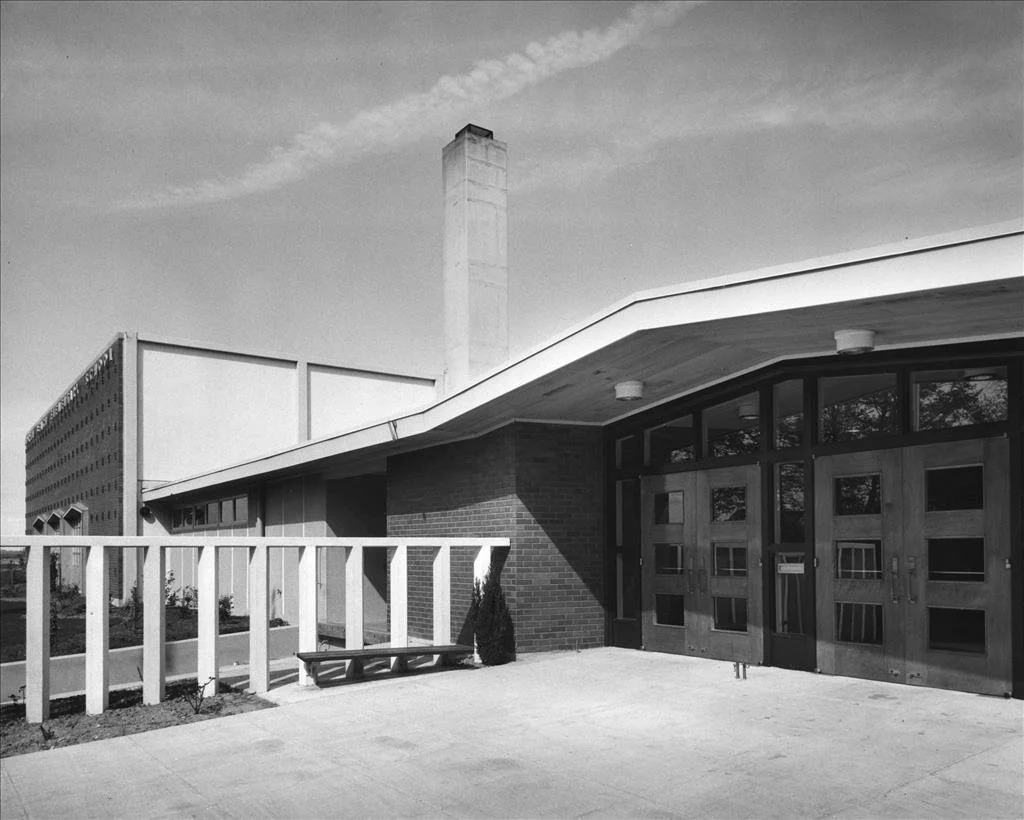
North Beach, 1960. Courtesy Seattle Public Schools 259-2
From Golf Course to Classroom: A History of North Beach Elementary
North Beach Elementary has been part of our corner of northwest Seattle for more than 65 years, and just like today, its history is closely tied to the neighborhood around it.
In 1950, the land was home to the Olympic Golf Course, which stretched north of NW 85th Street and west of 15th Avenue NW. At the time, all of this area was referred to as “Crown Hill.”
As Seattle grew outward, there was increasing interest in turning the course into housing, but the the U.S. Army was also interested in the site for defense. In May of 1950, the Army expressed interest in the site for gun emplacements, and the Seattle School Board announced its own interest a day later. The Army took part of the course for an anti-aircraft facility and later sold land to the district, leasing back 3.34 acres. So, the district's land came in two parcels.
Most of the remaining course later became the Olympic Manor neighborhood.
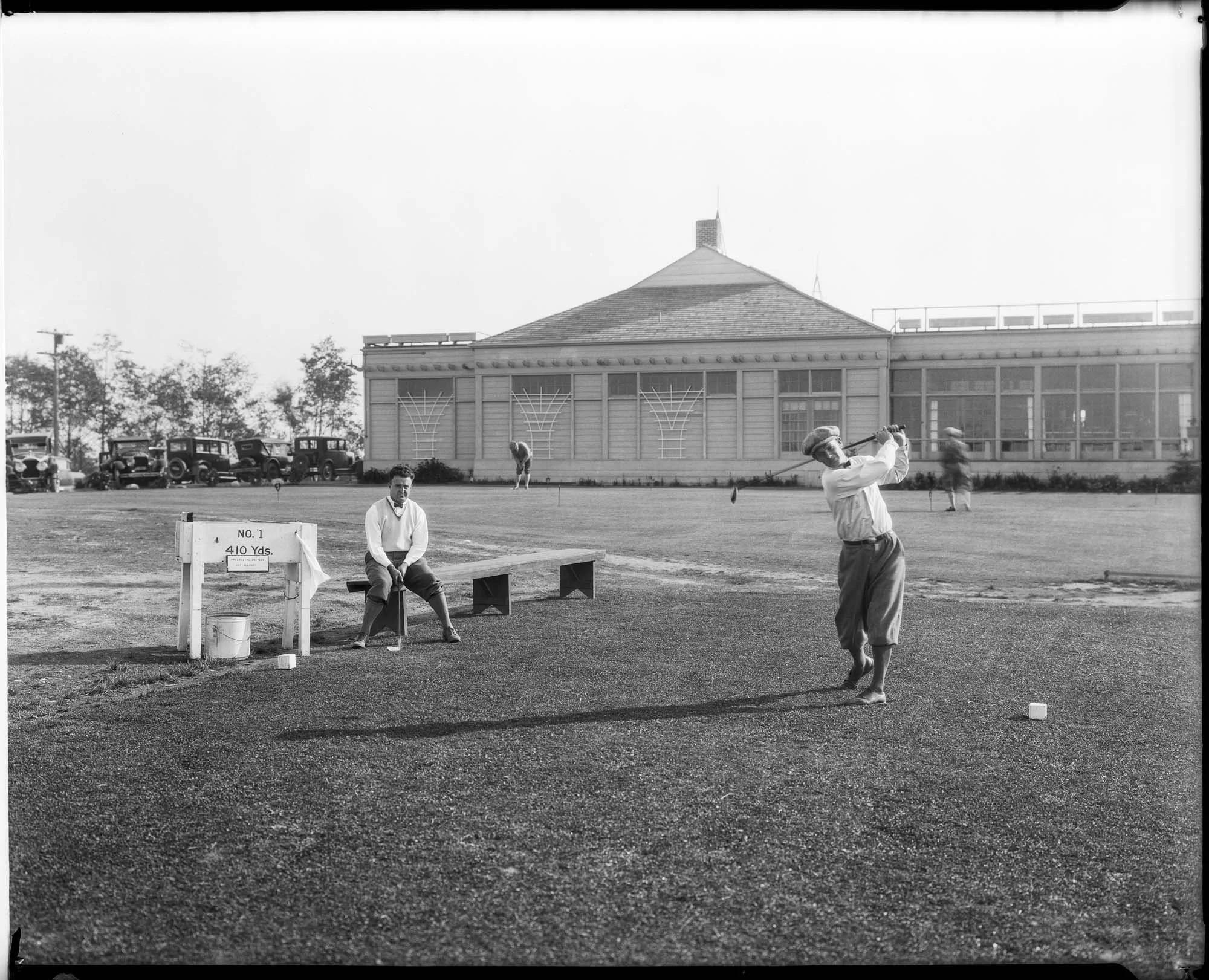
Golfers on course at Olympic Golf and Country Club, circa 1925, Photo courtesy of MOHAI, PEMCO Webster & Stevens Collection, 1983.10.3011.1
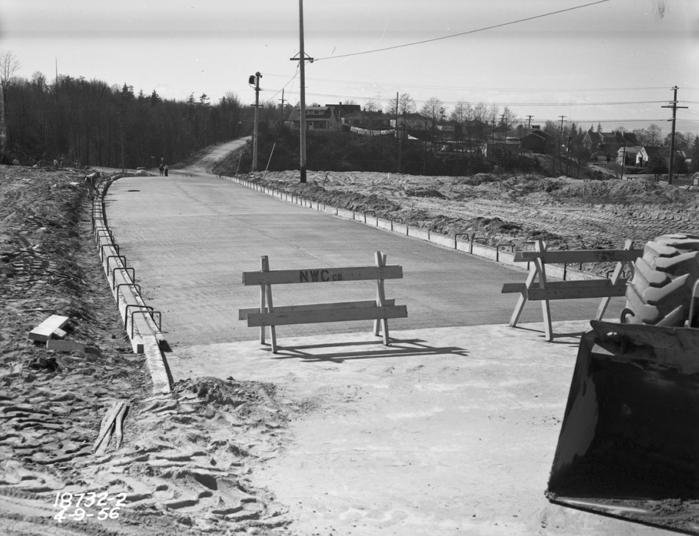
Olympic Manor Paving, April 9 1956. Photographed by Roletto, Image courtesy of Courtesy of the Seattle Municipal Archives, #53272, Series 2613-07.
In 1953, Northwest Elementary opened as a portable annex on the eastern parcel to relieve crowding at the Crown Hill School, but it closed again in spring 1955. The permanent building that exists today was was built on the western parcel. North Beach Elementary opened in 1958 with 446 students, many of whom came from Crown Hill and Loyal Heights. The school was named on July 30, 1958 and opened that September as a 15-room, one-story building with brick veneer designed by John Graham & Co., on a 6.89-acre site.
How did 446 students fit?
It's a fair question for anyone who knows the building today. Those 446 students all fit inside the original 15-room building, since the annex portables had closed three years earlier. That works out to roughly 30 students per room, and likely a few more per class, since not every room was a classroom. But classes of 30 or more were common in the late 1950s, at the height of the baby boom, when young families were filling new neighborhoods like Olympic Manor. North Beach was built precisely because other nearby schools couldn't hold everyone, so full classrooms were the norm.
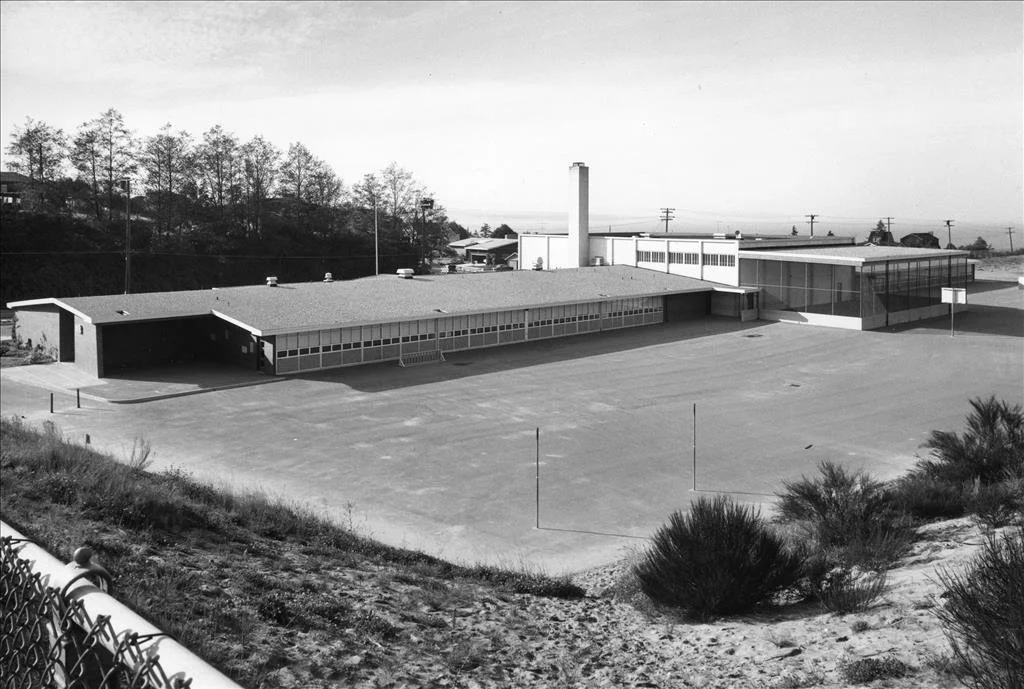
North Beach, 1960 Courtesy Seattle Public Schools 259-1
And over time, the campus grew. The school added it’s first portable (again) in 1994, and over the years, more arrived from other schools, including Columbia, Hale, Schmitz Park, McGilvra, Bagley and Roxhill. Enrollment reached its peak of 389 in 2019 - It's an interesting contrast: fewer students than opening day, but a much larger footprint, a reflection of how much smaller classes and the needs of a school have changed since 1958.
Reading has long been a focus at North Beach, and you can see it in the building itself. In 1971, the school expanded its library by taking down the wall between two classrooms. A few years later, in fall 1974, North Beach introduced a "Primer-Divided Day," with half of each class arriving and leaving an hour early so teachers could work on reading with smaller groups. In the 1990s, classes paired across grade levels for peer tutoring, alongside a Young Authors program and a classics reading series.
The school has made room for connection beyond Seattle. In 1999, an exchange teacher from Japan helped start a Japanese language and culture program, and students practiced their Japanese with a sister school in Kagoshima over video while those students practiced English. Closer to home, Principal Niki Hayes founded the North Beach Chronicle school newspaper in January 2001.
Today, North Beach is a K to 5 school at 9018 24th Avenue NW, home of the Seals, in purple and gold. It's a school built by and for its neighborhood, and that history is worth knowing.
Source: Building for Learning: Seattle Public School Histories, via HistoryLink.org
Sources:
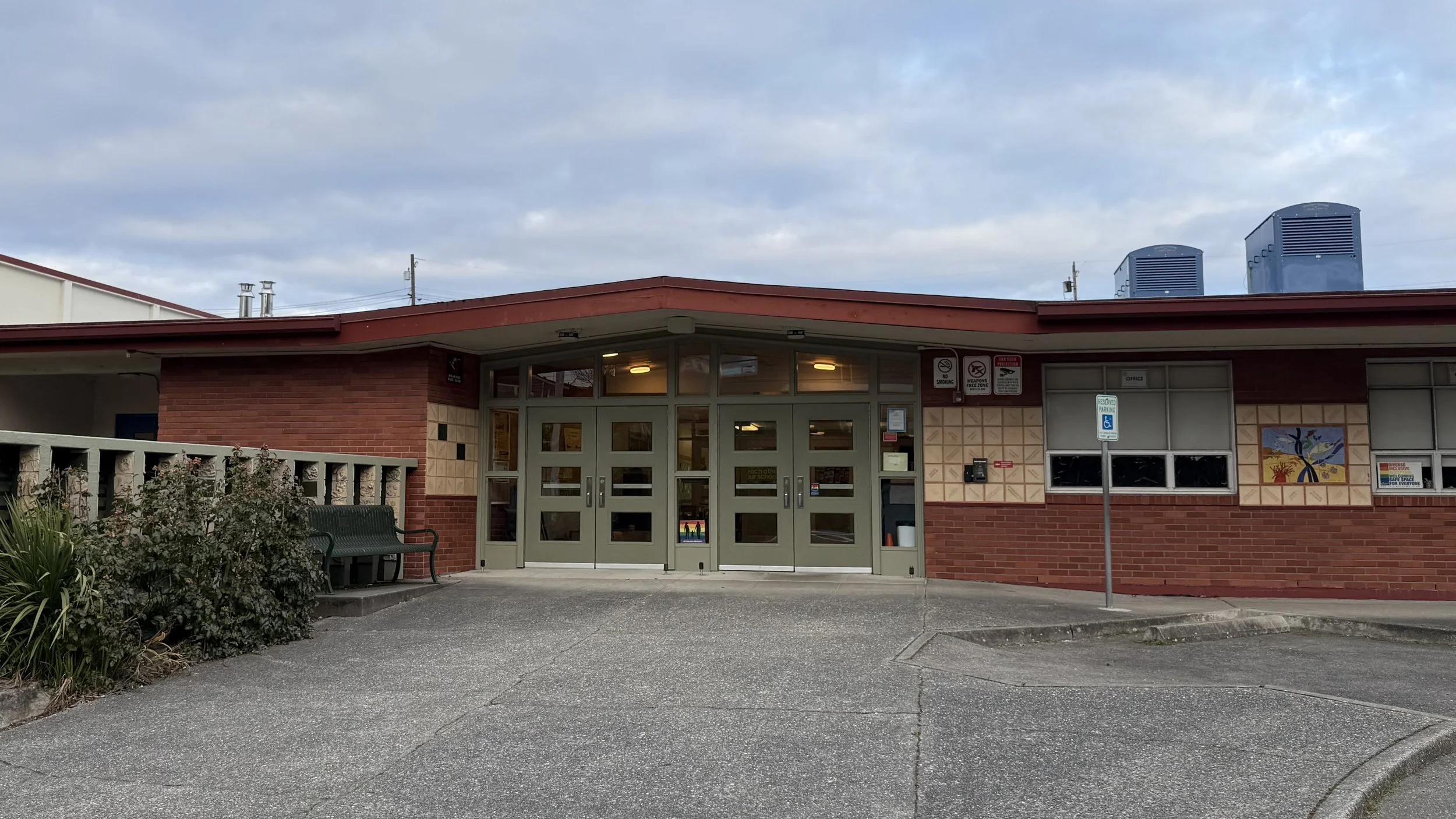
North Beach in 2026 - courtesy of Peri Erickson-Brown